
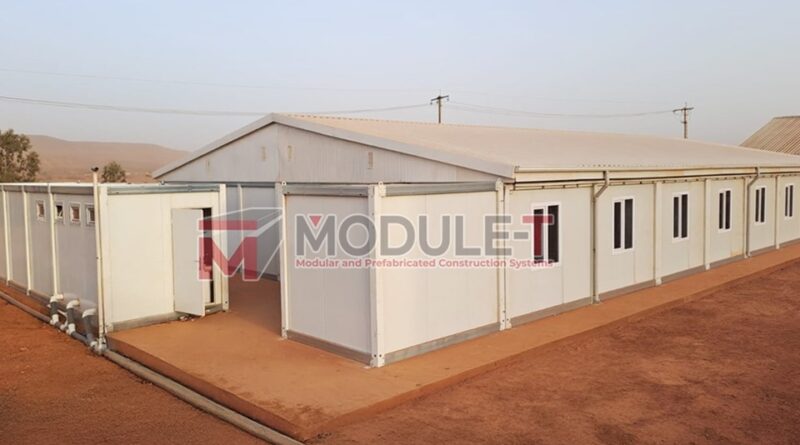
What To Expect From A Modular Building Manufacturer
A modular building project can face delays long before manufacturing begins. Incomplete layouts, unclear installation responsibilities, unsuitable material choices and overlooked transport restrictions may create more disruption than the production stage itself. For this reason, working with an experienced modular building manufacturer such as Module-T is not simply a matter of comparing unit prices. It requires evaluating whether the manufacturer can coordinate engineering, production, international logistics and site installation within a clearly defined project scope.
This capability becomes especially important in large-scale projects involving offices, accommodation facilities, schools, healthcare buildings, social facilities or workforce support units. A manufacturer serving international markets must be able to manage changing climate requirements, transport constraints, local site conditions and phased delivery schedules without losing control of the overall building programme.
Why Early Project Definition Matters
The planning process should begin with a clear description of how the building will be used. Workforce capacity, room distribution, expected operating period and site conditions all influence the final configuration.
A small administrative building may require only a limited number of rooms, while a large project may involve several connected buildings, separate departments, meeting areas, sanitary sections and technical spaces. These requirements should be documented before the design is approved.
For international developments, early definition also gives the manufacturer time to review local climate conditions, delivery routes, installation resources and project phasing. This reduces the likelihood of redesign after production planning has started.
Design & Engineering Capabilities
A manufacturer should be able to translate operational requirements into a workable building system. This involves more than arranging rooms within a floor plan.
Structural calculations, module connections, circulation areas and load requirements must be considered together. Multi-storey or high-capacity complexes also require coordinated planning for stairs, technical services, safe circulation and future building connections.
Module-T combines manufacturing with project-based engineering for modular developments delivered to different international markets. This experience is relevant when a project includes multiple building types or requires the same technical standard to be maintained across a large site.
Factory Production & Quality Control
Factory-controlled manufacturing provides a structured environment for material handling, dimensional accuracy and repeated quality checks. Structural frames, wall systems, interior finishes and technical installations can be prepared according to approved drawings before delivery.
Large orders require more than individual unit quality. Production scheduling, material consistency, drawing control and coordination between electrical, mechanical and architectural components must remain stable across the full project volume.
Buyers should request technical documentation explaining the building system, material specifications, inspection procedures and production responsibilities. These records create a clearer basis for quality review before delivery.
International Transport & Site Installation Planning
Transport and assembly should be considered during the design stage rather than after production is complete. Road limitations, delivery distance, lifting requirements and site access may affect module dimensions, packaging and installation sequencing.
On large international projects, several deliveries may need to arrive in a controlled order so that local teams can assemble buildings without obstructing later phases. Module-T’s international project experience supports this coordination by connecting manufacturing schedules with transport planning, site access and assembly requirements.
Responsibilities should be divided clearly between the manufacturer, transport provider, installation team and buyer. The quotation and contract should explain who manages foundations, unloading, lifting, assembly, utility connections and final inspections.
Adapting The Building To Climate & Use
A building designed for a hot, humid region requires a different specification from one intended for cold or high-altitude conditions. Insulation, roof construction, ventilation, corrosion protection and external finishes should reflect the destination.
Occupancy also affects the technical design. A high-capacity accommodation complex may require different ventilation and utility planning from an office building or educational facility. An international manufacturer should therefore adapt the specification to both local conditions and operational use rather than applying one standard solution to every market.
Choosing The Right Project Partner
The strongest manufacturer is not necessarily the company offering the lowest quotation. It is the one that can demonstrate production capacity, engineering discipline, international delivery experience and the ability to coordinate large project scopes.
A well-managed modular development depends on continuity between design, production, transport and site preparation. When these stages are handled as one connected process, project owners gain a more predictable route from the initial brief to completed buildings.